
Consultation
+91 98245 43810
Consultation
+91 98245 43810
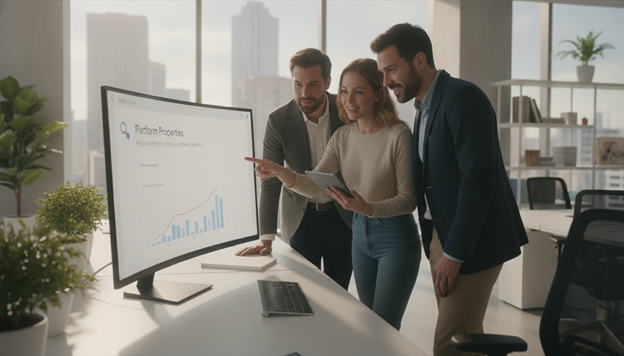
Google introduced a major update to the Search Console on July 7, 2026. This update connects eligible accounts from Instagram, TikTok, X, and YouTube to Search Console.
With Platform Properties, creators and brands can see how their posts and videos show up in Google. They get reports on clicks, impressions, search queries, and how each post or video performs.
Google made this update available worldwide on July 29, 2026. However, access might come at different times. This update is crucial for Indian businesses. It helps them use social SEO and video SEO to reach more people.
For the first time, Google Search performance data lets teams compare website results with social content. This can show which short videos, creator posts, and brand updates get the most search demand.
The July 2026 Google Search Console update changed how we see data. It now includes more than just websites. Google introduced Platform Properties on July 7, starting global availability on July 29.
Creators in India and other places now have more tools. They can see how people find their content through Google. This is different from just looking at a website.
Platform Properties help with finding social content in Search, Discover, and Google News. It shows impressions, clicks, and search queries that lead to a profile or post.
This is different from what platforms like Instagram, TikTok, X, and YouTube offer. Their tools show what happens after someone visits. But Search Console helps with brand visibility by showing first impressions in Google results.
Google has introduced platform properties to its Search Console. This feature links a social or video profile to Search Console. It helps creators see how their public posts, videos, and linked content perform in Google Search.
A platform property is an analytics view in Search Console. It’s not a public page that shows up in Google Search. This is different from Google Search profiles, which share content from various platforms.
Each option tracks a different online presence. A domain property looks at an entire website domain, including subdomains and supported protocols. It’s great for businesses needing a wide view of their site’s visibility.
A URL prefix property focuses on a specific web address and its pages. It’s useful for brands managing a certain folder, subsite, or website version. Both require website verification.
On the other hand, a platform property links to a supported account on platforms like video and social media. It shows Google Search activity for publicly available content from that profile. These Search Console types let teams track websites and creator channels separately.
Creators in India can use platform properties for supported accounts, even without a website. This helps with creator SEO by showing how people find public videos and social posts through Google.
Brands, publishers, social media managers, and marketing teams can also benefit from this feature. A domain property might still be useful for a company site. Meanwhile, a URL prefix property can track a focused campaign area. Platform data adds search context for content shared beyond the site.
Those who already have a Google Search profile might see Search Console access for the same supported platform. This makes creator SEO reporting easier when content appears on Google Search and social channels.
Google now supports Instagram, TikTok, X, and YouTube. Creators and brands in India can link their profiles. This lets them see how their posts and videos show up in Google results.
Instagram Search Console tracks how public Reels, posts, and profiles appear in Google. TikTok Search Console looks at public videos. X Search Console checks public posts that Google can index.
YouTube Search Console shows how videos and channel content do outside YouTube. It includes exposure from Google Search and Google Discover and News, if available.
Platform property | Public content measured | Potential Google surfaces |
Instagram Search Console | Public posts, Reels, and profiles | Google Search, Discover, Google News |
TikTok Search Console | Public short-form videos and profiles | Google Search, Discover, Google News |
X Search Console | Public posts and profile pages | Google Search, Discover, Google News |
YouTube Search Console | Public videos, Shorts, and channel pages | Google Search, Discover, Google News |
Google hasn’t said when more platforms will be added. It depends on the content, if the account is eligible, and if Google can show it in results.
Platform Properties let you see social and video content in Google Search Console. Start by going to the welcome screen or the property selector. Then, choose Add Property. Pick Instagram, TikTok, X, or YouTube to set up Platform Properties for your account.
Choose your platform and follow the steps on the screen. You’ll need to verify your social account access. This is done through the platform’s approved sign-in process. Search Console will then confirm that the new property has been added.
To connect YouTube to Search Console, pick YouTube from the options and approve access to the right channel. Make sure to double-check the channel name, especially if you manage different regional or creator accounts.
Platform | Setup action | Access check |
Select Instagram and authorize the connected account. | Confirm the profile matches the brand or creator account. | |
TikTok | Select TikTok and approve the requested connection. | Review the active account before completing access. |
X | Select X and sign in through the authorization prompt. | Check that the chosen handle is the intended one. |
YouTube | Select YouTube and grant channel access. | Confirm the channel name and associated Google account. |
Reports might be empty at first because data collection starts after authorization. Google says it can take up to 48 hours for search data to show up. This is normal for new social performance reporting.
Keep track of when you connected. Add a note when you change a YouTube title, update an Instagram post, or rewrite a TikTok caption. These notes help you compare later search activity with the date of each change.
The Search Console Performance report combines Google visibility data for supported social accounts and video channels. It shows how posts and videos appear on Google surfaces. This is beyond what’s measured inside each platform.
For brands in India, the report helps distinguish between on-platform engagement and Google-driven visits. It has filters for easier review by date, device, country, post, video, or query.
Platform properties report total impressions, total clicks, and the search terms behind visits. Social search impressions show how often eligible posts appeared in Google results. Google Search clicks show when people opened that content.
Creators can sort individual posts or videos to review visibility over time. Video search queries reveal the words users enter before selecting a YouTube video or another supported video result.
Report view | What it measures | Useful filter |
Clicks | Visits from Google results to a post or video | Date range, country, device |
Impressions | Times content appeared on a Google surface | Post, video, search appearance |
Queries | Words and phrases connected to content visibility | Query, page, video |
Content items | Performance for individual posts and videos | Platform, date range, device |
A platform property can include data from Google Search and Google Discover. The July 29, 2026 update also added Google News reporting. This is when eligible social or video content receives traffic there.
These surface views let teams compare social search impressions with Discover exposure and news-related visits. Google Search clicks can then be reviewed by source. This helps understand where a post or video gained visibility.
Platform Properties give a broader view of social posts and videos in Google. The Search Console Insights report shows recent traffic, content patterns, and changes in visibility. It all comes together in one place.
Creators and brands in India can check the report for top posts and changing trends. It groups search terms into top, rising, and falling categories. This makes it easier to see what’s changing.
Looking at trending search queries can help plan the next video or post. A rising query might show new interest. A falling query could mean a topic is losing attention.
Search Console Achievements tracks progress over time for social and video accounts. It highlights milestones like increased search clicks in 28 days.
By reviewing milestones with the Insights report, teams can see how content activity leads to growth. This helps in growing social SEO without just looking at app metrics.
Report feature | What it highlights | How teams can use it |
Top content | Posts and videos getting strong Google visibility | Find formats and themes to repeat |
Trending search queries | Terms rising or falling in discovery | Plan timely topics and hashtags |
Search Console Achievements | 28-day search click milestones for Platform Properties | Watch account progress over time |
Native social analytics track what happens inside apps like Instagram, TikTok, X, and YouTube. They look at likes, comments, shares, follower growth, reach, and video views. This helps teams understand social media metrics after a post is found in the app.
Google search performance data looks at a different path. It measures clicks, impressions, and search queries from Google surfaces. This shows which posts and videos get found through search, not just in the app’s feed.
Data source | What it measures | Useful question |
Native social analytics | Reach, reactions, shares, comments, and views within an app | How did people interact after seeing the content? |
Google search performance data | Clicks, impressions, queries, and Google visibility | Which content appears when people search? |
Platform Properties | Search driven discovery for individual posts and videos | Which platform and post keep attracting visitors? |
Together, native social analytics and Google search performance data offer a broader view. A video might get lots of app engagement right away. But an older post could still get found through search, showing its lasting value.
Platform Properties make it easier to analyze social video performance. They show Google search data next to each supported account. Google’s July 29, 2026 guide recommends using Insights, filters, and exports to find useful patterns. This is for Instagram, TikTok, X, and YouTube.
Look at Insights query groups for top, trending up, and trending down searches. These Google Search trends show what viewers want next. They range from quick answers to deeper video topics.
Use these query terms to shape captions, video titles, playlists, and follow-up posts. A rising search theme can help Indian brands plan content around seasonal events, local interests, or product demand.
Apply a 24-hour filter to check for sudden search traffic on new posts. When a video or Reel gains attention, cross promote social content on other active platforms while interest is still high.
Add annotations when you revise a YouTube title, change a TikTok caption, or update a post topic. These notes help connect traffic shifts with specific content changes.
Export data from separate platform properties into one spreadsheet for content performance comparison. Use the same Google metrics to compare impressions, clicks, and search visibility across formats.
Page filters and comparison mode can separate playlists, Shorts, long videos, and topic groups. Review older posts that regain search traffic; they may suit a pinned position, a refreshed caption, or a new follow-up video.
Platform Properties connect Instagram, TikTok, X, and YouTube to Google Search Console. This guide helps creators and brands see what gets clicks and impressions. They can also see search demand after linking an account.
Performance reports show what people search for, where they are, and what devices they use. Insights provide details on traffic changes and trending topics. Achievements highlight when clicks increase over 28 days. These tools make it easier to track social and video SEO.
Google made Platform Properties available worldwide on July 29, 2026. But some accounts might get it later. After linking an account, data starts collecting. Reports might take up to 48 hours to show up.
Use Google visibility reporting to see how different formats perform. Refresh old posts and create new ones based on what people search for. With Google’s data, each post can help discover more in the long run.
Adding {{itemName}} to cart
Added {{itemName}} to cart